FEMIS ID: Name: Class:
STRAND 1: Social Organisation & Processes · 26 marks
Question types: Multiple Choice (10) • Matching (6) • Comprehension Passage (5) • Paragraph Writing (5)
Part A — Multiple Choice [10 marks]
1. The FAO of the United Nations works hard to defeat
✔ Answer: D
2. The World Bank mainly
✔ Answer: B
3. A country which is NOT a member of the United Nations is
✔ Answer: B
4. Fiji belongs to which group of Pacific islands?
✔ Answer: A
5. People with light skin and blonde hair are commonly called
✔ Answer: C
6. A characteristic strongly associated with Pacific Island identity is
✔ Answer: D
7. Farmers, teachers and fishers grouped by work form a(n)
✔ Answer: A
8. The World Health Organisation (WHO) was formed in
✔ Answer: D
9. UNESCO was formed in
✔ Answer: A
10. The IMF promotes
✔ Answer: A
Part B — Matching [6 marks]
1. Groups sharing faith
✔ Answer: A
2. Groups sharing work
✔ Answer: B
3. Groups sharing ancestry
✔ Answer: C
4. Groups sharing language
✔ Answer: D
5. Groups sharing customs
✔ Answer: E
6. Groups sharing income level
✔ Answer: F
Part C — Comprehension Passage [5 marks] "Greenpeace - Voice of the Environment"
sailed to stop nuclear testing. Today it has offices in more than forty countries and works to protect the oceans, forests and atmosphere. Because it is an NGO, Greenpeace does not belong to any government - it is funded by ordinary people. In the Pacific, Greenpeace campaigns against over-fishing and drift-netting and urges the world to act on climate change, which threatens our low-lying islands.
1. What kind of organisation is Greenpeace?
✔ Model answer: (see the Detailed Solution PDF)
2. When and why did Greenpeace begin?
✔ Model answer: (see the Detailed Solution PDF)
3. Who funds Greenpeace?
✔ Model answer: (see the Detailed Solution PDF)
4. Name TWO things Greenpeace protects.
✔ Model answer: (see the Detailed Solution PDF)
5. Name ONE campaign close to the Pacific.
✔ Model answer: (see the Detailed Solution PDF)
Part D — Paragraph Writing [5 marks]
STRAND 2: Time, Continuity & Change · 22 marks
Question types: Multiple Choice (8) • True/False (6) • Fill in the Blanks (4) • Resource Interpretation (4)
Part A — Multiple Choice [8 marks]
1. The quick spread of a disease within a short time in one area is a(n)
✔ Answer: D
2. The Olympic Games are held every
✔ Answer: B
3. A group of people settling away from their place of origin to take control of another area is
✔ Answer: A
4. Apollo 11 landed on the moon in
✔ Answer: C
5. Dr. Jiko Luveni is famous as Fiji’s first woman
✔ Answer: C
6. The Commonwealth Games was first held in
✔ Answer: A
7. The Pacific Games are held every
✔ Answer: B
8. The lady who established the Missionaries of Charity to serve the poor was
✔ Answer: B
Part B — True or False [6 marks]
1. Historians study the future.
✔ Answer: F
2. The sea or ocean does not affect the climate of a place.
✔ Answer: F
3. Banks provide commercial services.
✔ Answer: T
4. Members of parliament are involved in politics.
✔ Answer: T
5. The WHO was formed in 1948.
✔ Answer: T
6. Mahatma Gandhi was a leader of the Indian independence movement.
✔ Answer: T
Part C — Fill in the Blanks [4 marks]
1. World War I began in 19 and Fiji became independent in 19. (2 marks)
✔ Answers: 1914; 1970
2. The Red Cross was founded in 18 and the next Commonwealth Games (2026) will be held in , Scotland. (2 marks)
✔ Answers: 1863; Glasgow
Part D — Resource Interpretation [4 marks] study the photograph
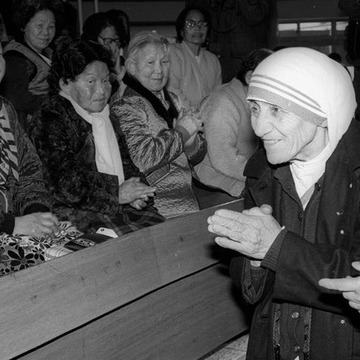
1. Who is the person in the photograph?
✔ Model answer: (see the Detailed Solution PDF)
2. Which organisation did she found?
✔ Model answer: (see the Detailed Solution PDF)
3. Where did she serve the poor?
✔ Model answer: (see the Detailed Solution PDF)
4. Name ONE award she received.
✔ Model answer: (see the Detailed Solution PDF)
STRAND 3: Place & Environment · 26 marks
Question types: Multiple Choice (10) • Matching (6) • Short-Answer Questions (6) • Resource Interpretation (4)
Part A — Multiple Choice [10 marks]
1. An economic effect of climate change on farming regions is
✔ Answer: C
2. Heavy flooding can cause stagnant water which leads to
✔ Answer: A
3. In which climatic region would you most likely find harsh winters and heavy snowfall?
✔ Answer: C
4. Which of the following is an effect of climate change?
✔ Answer: C
5. When forests are cleared, one likely result is
✔ Answer: D
6. The two most important factors that determine climate are
✔ Answer: D
7. Ozone depletion primarily results from the release of
✔ Answer: C
8. Traditional knowledge refers to practices
✔ Answer: C
9. The long-term pattern of weather in a particular area is
✔ Answer: D
10. Global warming is mainly caused by
✔ Answer: B
Part B — Matching [6 marks]
1. Energy from the sun
✔ Answer: A
2. Using resources so they last
✔ Answer: B
3. Protected coastal ecosystems
✔ Answer: C
4. Energy that cannot be replaced
✔ Answer: D
5. Reduce, re-use and...
✔ Answer: E
6. Damage to land by rubbish
✔ Answer: F
Part C — Short-Answer Questions [6 marks]
1. Define the term natural disaster and give an example.
✔ Model answer: (see the Detailed Solution PDF)
2. Give one reason why rainforests are removed.
✔ Model answer: (see the Detailed Solution PDF)
3. Describe one feature of the Temperate climatic region.
✔ Model answer: (see the Detailed Solution PDF)
Part D — Resource Interpretation [4 marks] study the resource
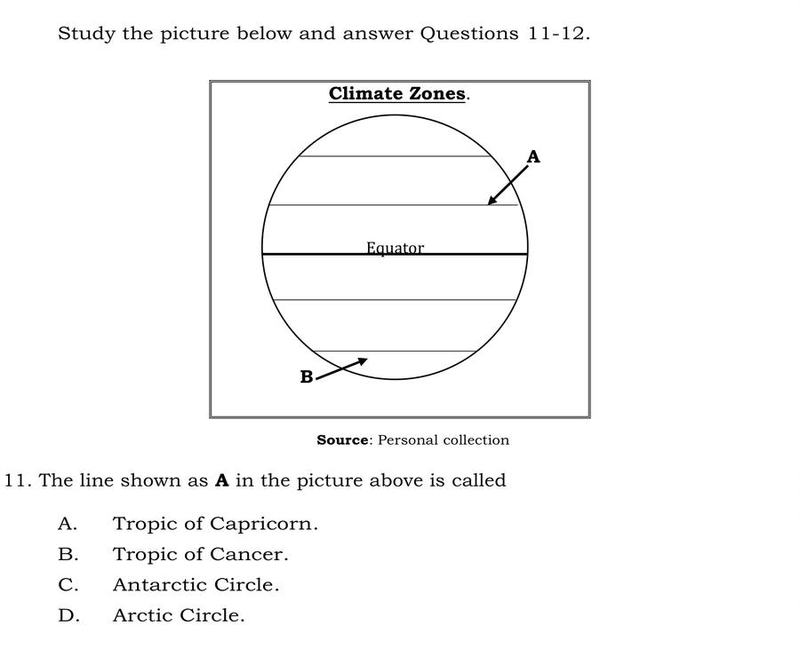
1. Name the line at 0 degrees latitude.
✔ Model answer: (see the Detailed Solution PDF)
2. At which degrees do the Tropics lie?
✔ Model answer: (see the Detailed Solution PDF)
3. Describe the climate near the poles.
✔ Model answer: (see the Detailed Solution PDF)
4. Name the climate zone around the Equator.
✔ Model answer: (see the Detailed Solution PDF)
STRAND 4: Resources & Economic Activities · 26 marks
Question types: Multiple Choice (10) • Matching (6) • Comprehension Passage (5) • Paragraph Writing (5)
Part A — Multiple Choice [10 marks]
1. A major contributor to economic development in Fiji is
✔ Answer: A
2. Which resource cannot be stored or saved for later use?
✔ Answer: B
3. Globalisation has impacted Fiji and the Pacific by
✔ Answer: D
4. A good way to save money is to
✔ Answer: D
5. A characteristic of resources is that they
✔ Answer: D
6. The factor that greatly influences the interconnection of countries today is
✔ Answer: D
7. Time management helps us to
✔ Answer: C
8. An advantage of globalisation is the
✔ Answer: D
9. The best way to avoid impulse spending is to
✔ Answer: A
10. “Time and tide wait for no man” teaches us to
✔ Answer: C
Part B — Matching [6 marks]
1. Money paid out
✔ Answer: A
2. Plan of your study hours
✔ Answer: B
3. Money gained from work
✔ Answer: C
4. Spending less than you earn
✔ Answer: D
5. Bank account for saving
✔ Answer: E
6. A list of items to buy
✔ Answer: F
Part C — Comprehension Passage [5 marks] "Aid - Friends Across the Ocean"
donations of cash or kind given by donor countries and organisations, and unlike a loan, it does not have to be repaid. After Cyclone Winston, Australia, New Zealand, India and China sent tents, food, water purifiers and rescue teams to Fiji. The World Bank and the Asian Development Bank also supported rebuilding programmes. Aid is one way the countries of the world show that we all belong to one global family.
1. What is aid?
✔ Model answer: (see the Detailed Solution PDF)
2. Does aid have to be repaid?
✔ Model answer: (see the Detailed Solution PDF)
3. Name TWO donor countries that helped Fiji after Cyclone Winston.
✔ Model answer: (see the Detailed Solution PDF)
4. What TWO things did the donors send?
✔ Model answer: (see the Detailed Solution PDF)
5. Name ONE organisation that supported rebuilding.
✔ Model answer: (see the Detailed Solution PDF)
Part D — Paragraph Writing [5 marks]