FEMIS ID: Name: Class:
STRAND 1: Social Organisation & Processes · 26 marks
Question types: Multiple Choice (10) • Matching (6) • Comprehension Passage (5) • Paragraph Writing (5)
Part A — Multiple Choice [10 marks]
1. The FAO of the United Nations works hard to defeat
✔ Answer: C
2. The World Bank mainly
✔ Answer: D
3. A country which is NOT a member of the United Nations is
✔ Answer: A
4. Fiji belongs to which group of Pacific islands?
✔ Answer: A
5. People with light skin and blonde hair are commonly called
✔ Answer: C
6. A characteristic strongly associated with Pacific Island identity is
✔ Answer: A
7. Farmers, teachers and fishers grouped by work form a(n)
✔ Answer: B
8. The World Health Organisation (WHO) was formed in
✔ Answer: A
9. UNESCO was formed in
✔ Answer: D
10. The IMF promotes
✔ Answer: D
Part B — Matching [6 marks]
1. Natives of Australia
✔ Answer: A
2. Natives of New Zealand
✔ Answer: B
3. People of Samoa and Tonga
✔ Answer: C
4. People of Kiribati and the Marshalls
✔ Answer: D
5. First inhabitants of a place
✔ Answer: E
6. Dark-skinned Pacific people
✔ Answer: F
Part C — Comprehension Passage [5 marks] "The European Union"
trade and political cooperation. Members can trade with one another without heavy taxes, and citizens may live and work in any member state. The EU also gives aid to developing countries, including Pacific Island nations, supporting schools, clean water projects and disaster relief. With twenty-seven members, the EU shows how former rivals can become partners.
1. In which year was the EU formed?
✔ Model answer: (see the Detailed Solution PDF)
2. State TWO purposes of the EU.
✔ Model answer: (see the Detailed Solution PDF)
3. What can EU citizens do that others cannot?
✔ Model answer: (see the Detailed Solution PDF)
4. How does the EU help developing countries?
✔ Model answer: (see the Detailed Solution PDF)
5. How many members does the EU have today?
✔ Model answer: (see the Detailed Solution PDF)
Part D — Paragraph Writing [5 marks]
STRAND 2: Time, Continuity & Change · 22 marks
Question types: Multiple Choice (8) • True/False (6) • Fill in the Blanks (4) • Resource Interpretation (4)
Part A — Multiple Choice [8 marks]
1. The modern Olympic Games were inspired by the ancient games held in
✔ Answer: D
2. Adolf Hitler was the leader of Nazi Germany from
✔ Answer: B
3. The first Fijian professional golfer ranked world number one is
✔ Answer: A
4. An example of a global pandemic is
✔ Answer: D
5. Baron Pierre de Coubertin founded the International Olympic Committee in
✔ Answer: A
6. World War II was from
✔ Answer: D
7. The first woman Prime Minister of Pakistan was
✔ Answer: D
8. People who study the past are called
✔ Answer: D
Part B — True or False [6 marks]
1. The Olympic Games are held every four years.
✔ Answer: T
2. Deserts are found in polar regions.
✔ Answer: F
3. The earth needs to be protected only by governments.
✔ Answer: F
4. A resource is a source or supply from which benefit is produced.
✔ Answer: T
5. Greenpeace is a governmental environmental organisation.
✔ Answer: F
6. Skin colour is one characteristic used to categorise groups of people.
✔ Answer: T
Part C — Fill in the Blanks [4 marks]
1. World War I began in 19 and Fiji became independent in 19. (2 marks)
✔ Answers: 1914; 1970
2. The Red Cross was founded in 18 and the next Commonwealth Games (2026) will be held in , Scotland. (2 marks)
✔ Answers: 1863; Glasgow
Part D — Resource Interpretation [4 marks] study the photograph

1. Who is the person in the photograph?
✔ Model answer: (see the Detailed Solution PDF)
2. Which sport is he famous for?
✔ Model answer: (see the Detailed Solution PDF)
3. Name ONE club he played for overseas.
✔ Model answer: (see the Detailed Solution PDF)
4. How does he inspire young sportspeople in Fiji?
✔ Model answer: (see the Detailed Solution PDF)
STRAND 3: Place & Environment · 26 marks
Question types: Multiple Choice (10) • Matching (6) • Short-Answer Questions (6) • Resource Interpretation (4)
Part A — Multiple Choice [10 marks]
1. The climate of a region determines
✔ Answer: A
2. The best way to reduce solid industrial waste is by
✔ Answer: C
3. The Tropic of Cancer lies at
✔ Answer: C
4. The sea or ocean affects the climate of a nearby place by
✔ Answer: D
5. Land pollution can be reduced by
✔ Answer: B
6. The Tropic of Capricorn lies at
✔ Answer: A
7. The four climatic zones include the Polar, Temperate, Tropics and
✔ Answer: C
8. Water pollution is caused mainly by
✔ Answer: B
9. The Prime Meridian is zero degrees
✔ Answer: C
10. The shape of an area of land — its hills, valleys and mountains — is called
✔ Answer: D
Part B — Matching [6 marks]
1. 0 degrees latitude
✔ Answer: A
2. 0 degrees longitude
✔ Answer: B
3. The shape of the land
✔ Answer: C
4. 23.5 degrees South
✔ Answer: D
5. The long-term pattern of weather
✔ Answer: E
6. Day-to-day condition of the atmosphere
✔ Answer: F
Part C — Short-Answer Questions [6 marks]
1. Explain an impact of a tropical cyclone in Fiji.
✔ Model answer: (see the Detailed Solution PDF)
2. Explain two ways women can contribute towards preparing for a natural disaster.
✔ Model answer: (see the Detailed Solution PDF)
3. State one way animals are affected when rainforests are cleared.
✔ Model answer: (see the Detailed Solution PDF)
Part D — Resource Interpretation [4 marks] study the resource
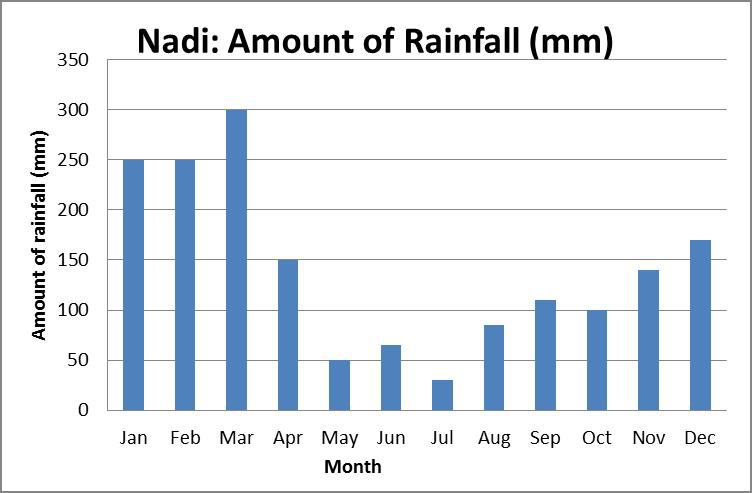
1. Identify the wettest month.
✔ Model answer: (see the Detailed Solution PDF)
2. Identify the driest month.
✔ Model answer: (see the Detailed Solution PDF)
3. Which TWO months recorded equal rainfall?
✔ Model answer: (see the Detailed Solution PDF)
4. State the trend over the months shown.
✔ Model answer: (see the Detailed Solution PDF)
STRAND 4: Resources & Economic Activities · 26 marks
Question types: Multiple Choice (10) • Matching (6) • Comprehension Passage (5) • Paragraph Writing (5)
Part A — Multiple Choice [10 marks]
1. Goods made in China, Japan and the USA sold in a Suva supermarket show we live in a
✔ Answer: A
2. An example of a financial institution is a
✔ Answer: A
3. Globalisation comes from “globe” and means the coming together of countries — a fast
✔ Answer: A
4. A budget is best described as a plan of
✔ Answer: D
5. Which of the following is a non-renewable source of energy?
✔ Answer: A
6. Aid from donor countries is
✔ Answer: D
7. In a family budget, which item is placed under INCOME?
✔ Answer: A
8. A common feature of globalisation is the rise of
✔ Answer: C
9. A budget is created to
✔ Answer: B
10. A source or supply from which benefit is produced is known as
✔ Answer: A
Part B — Matching [6 marks]
1. Interconnected world community
✔ Answer: A
2. Interchange of world views and products
✔ Answer: B
3. Donations from donor countries
✔ Answer: C
4. Fiji's biggest service industry
✔ Answer: D
5. Company operating in many countries
✔ Answer: E
6. Movement of qualified people abroad
✔ Answer: F
Part C — Comprehension Passage [5 marks] "Time - The Resource You Cannot Store"
time is different: once an hour is gone, it can never be brought back. That is why wise people manage their time carefully. They set priorities, do the most important tasks first, and keep a timetable. Students who plan their study time finish their work with less stress and still have time for family and sport. A fortnight has fourteen days - plan them well!
1. Which resource can never be stored?
✔ Model answer: (see the Detailed Solution PDF)
2. List TWO things that CAN be stored.
✔ Model answer: (see the Detailed Solution PDF)
3. What are TWO good time management habits?
✔ Model answer: (see the Detailed Solution PDF)
4. How do students benefit from planning study time?
✔ Model answer: (see the Detailed Solution PDF)
5. How many days are in a fortnight?
✔ Model answer: (see the Detailed Solution PDF)
Part D — Paragraph Writing [5 marks]